
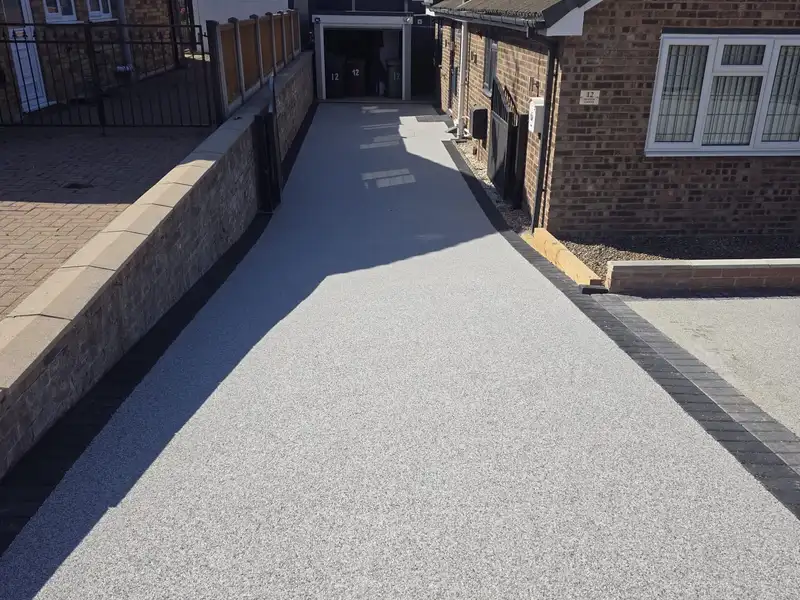
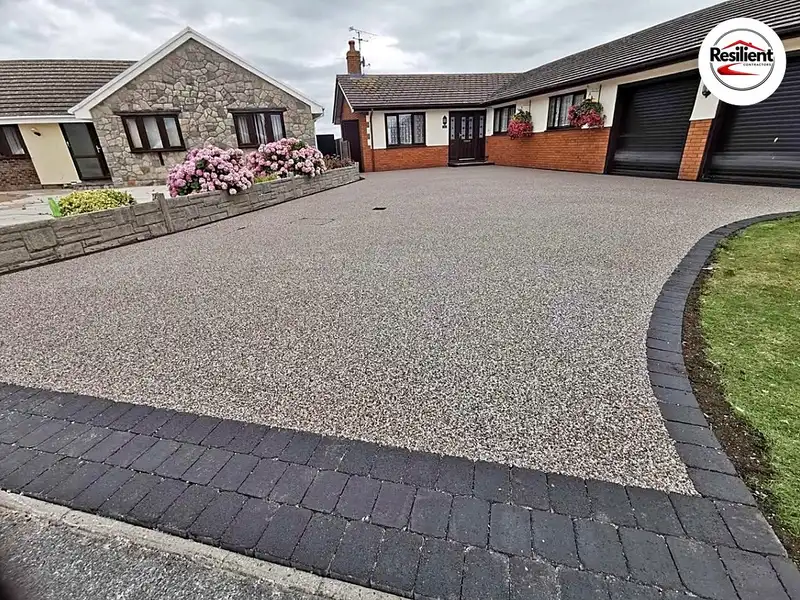
Resin bound driveway
Kippax, Leeds
Resin bound, block paving, tarmac and imprinted concrete, each built on a new base by our own employed team. Here's how the four compare, so you can see which suits your house, your ground and the way you use the drive.
We promise to reply to every enquiry within the hour.
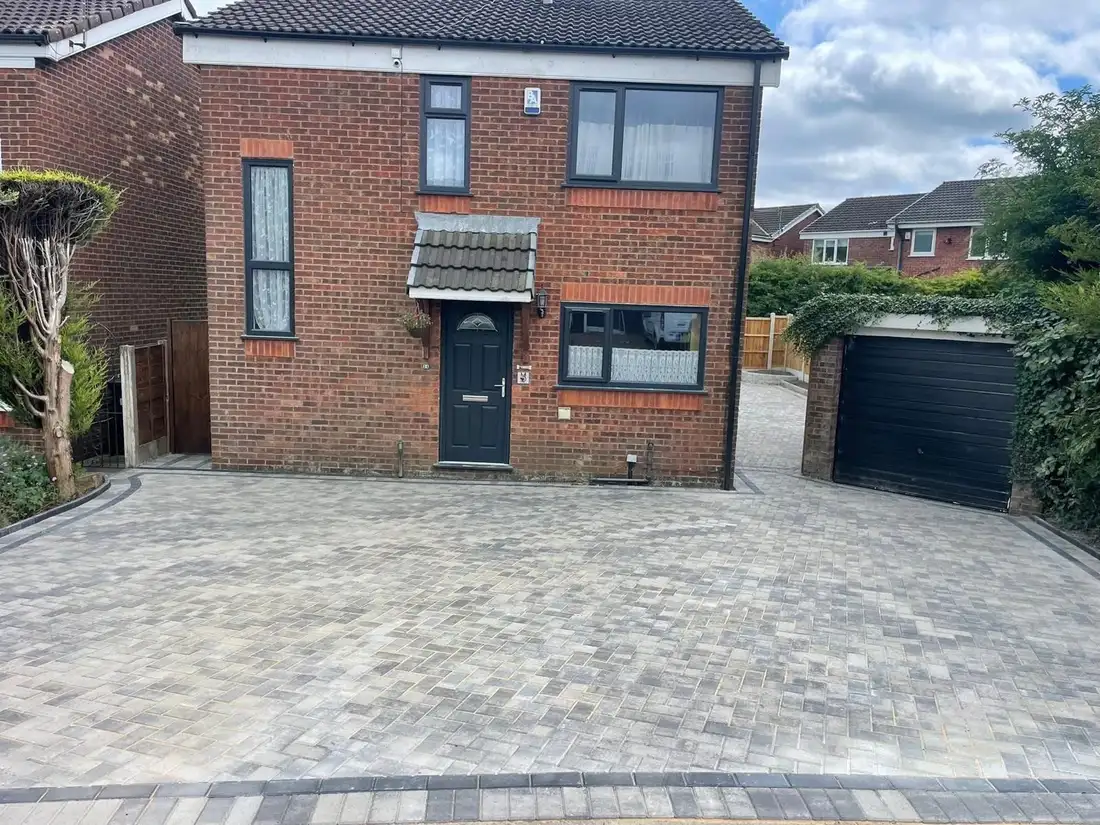
An honest side-by-side. Every one of them lasts when the base underneath is built properly.
| Surface | Best for | Look | Upkeep | Drainage |
|---|---|---|---|---|
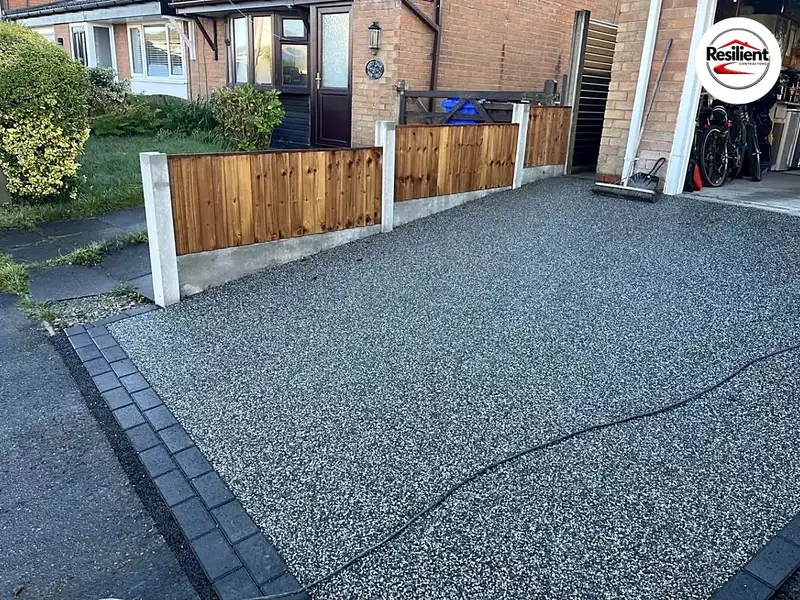
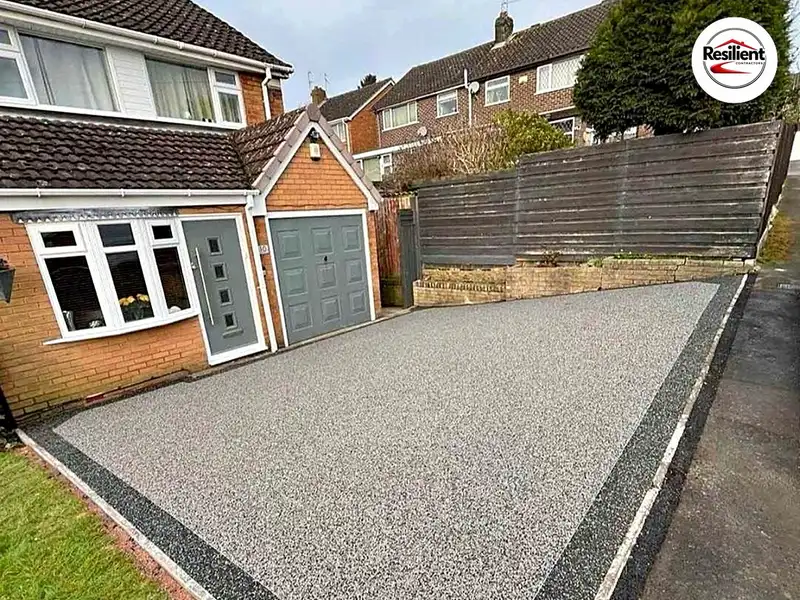
| Resin bound | A smooth, modern drive, and front gardens where the water has to drain away | Seamless natural stone in one colour, or a blend with borders and bands | A sweep, and a wash down now and then | Permeable when it's laid on a permeable base |
| Block paving | Busy family drives, patterns and borders, and spots that may need digging up later | Individual blocks laid in patterns such as herringbone, in many colours | Keep the joints topped up with sand and weeds out of them | Standard blocks shed water to drains or a border. Permeable blocks are made too |
| Tarmac | Long or wide drives where a plain, hard-wearing surface matters most | Plain black, usually finished with a block edge | Very little, though it can soften and mark on the hottest days | Standard tarmac sheds water to drains or a border. Porous asphalt is made too |
| Imprinted concrete | A patterned look laid as one solid slab | Concrete coloured and stamped to look like stone, slate or brick | Needs resealing from time to time to keep its colour and finish | Water runs off the surface, so it needs falls and drainage |
Start with how the drive is used and what the ground is doing. A drive that holds water needs a surface that drains, or drainage built in underneath. A drive that takes two cars and the odd van needs a base built for the weight. After that it comes down to the look you want and how much looking after you’re happy to do.
If you’re torn between two, that’s what the site visit is for. We’ll tell you which we’d choose for your drive and why.
Whichever surface you pick, the work underneath follows the same order, and it’s the part that decides how long the drive lasts. We dig out the old surface, sort out the drainage, build and compact a new sub-base, fit edging to hold everything in, then lay the surface. Our own employed team does all of it, from the first dig to the final sweep.
Every drive is dug out to at least 200mm, and resin bound to 230mm. Most drives get a sub-base of MOT Type 1, compacted in layers. Where the drive has to let water drain through, such as under resin bound, we use MOT Type 3, which has most of the fine material taken out so it stays porous.
Paving more than five square metres of a front garden in England needs planning permission if water can’t drain through the surface or run off onto a lawn or border. Permeable surfaces, such as resin bound on a porous base, permeable block paving or porous asphalt, need none. The Planning Portal’s guide to paving front gardens sets out the rule.
Driving across a pavement to reach your drive needs a dropped kerb, and that needs the council’s approval for a vehicle crossing. We make the application for you, and we build the crossing ourselves unless the council has its own approved contractor for the work. The council inspects it, so its timetable can affect when the drive is first usable from the road. Our town pages explain each council’s rules, and GOV.UK explains dropped kerb applications.
15 year structural guarantee on driveways.
Kippax, Leeds
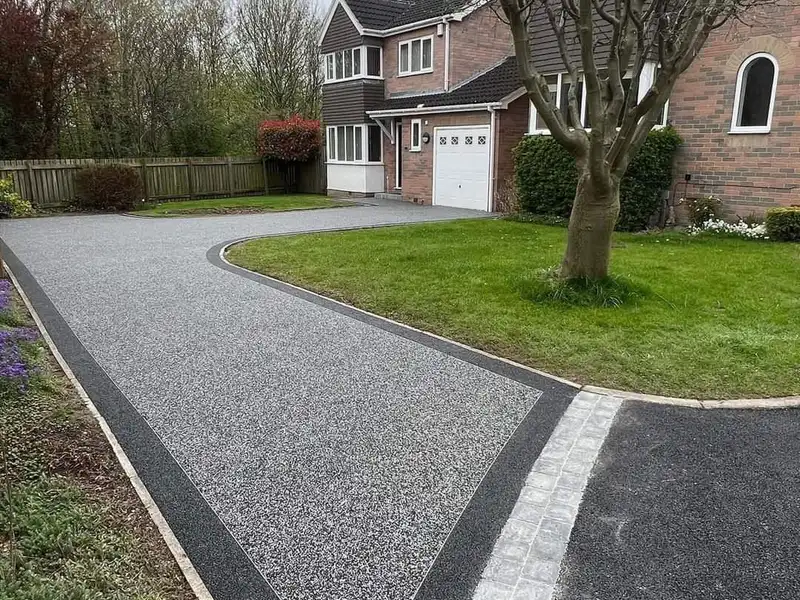
Harrogate
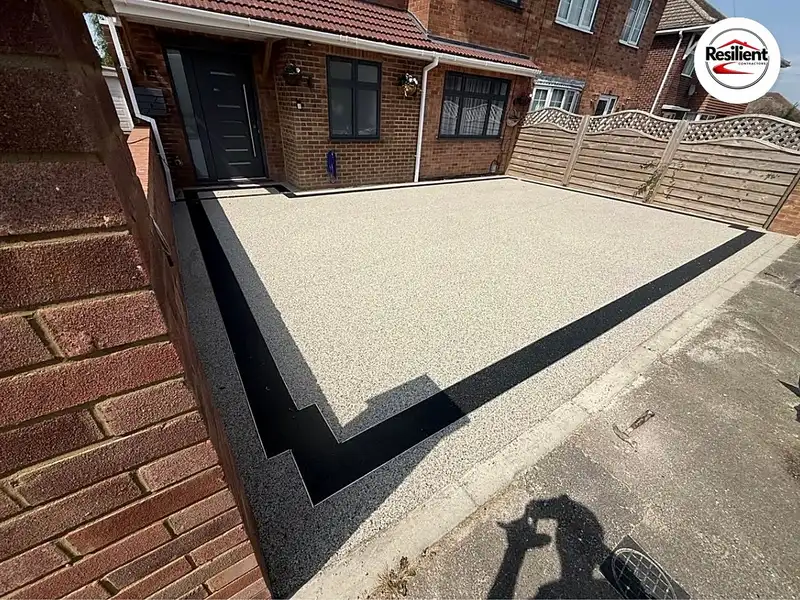
Leeds
York
Wakefield
Barnsley
Any of the four will last if the base under it is built properly. Most drives that fail early do so because the sub-base was too thin or badly compacted, not because of the surface on top.
Block paving has the edge for repairs, because single blocks can be lifted and relaid. Resin bound and imprinted concrete are harder to patch invisibly.
In England, yes if you're paving more than five square metres of a front garden with a surface water can't get through, and the rain doesn't run off to a lawn or border. Permeable surfaces need no permission at all. The Planning Portal has the details.
Nearly every drive needs the water to go somewhere. A permeable surface lets it soak through; a solid one needs falls that carry it to a channel drain, a soakaway or a border. We look at where the water goes now at the site visit and plan for it in the quote.
Usually, if the space is there. A wider drive may also need a longer dropped kerb, and that needs the council's approval before anyone can drive over the new section of pavement. We make that application for you.
Most drives take 3 to 5 days. The size, the surface and the weather all play a part, and the groundwork usually takes the longest. Your quote gives the start date we agree with you.
Next step
We promise to reply to every enquiry within the hour.