
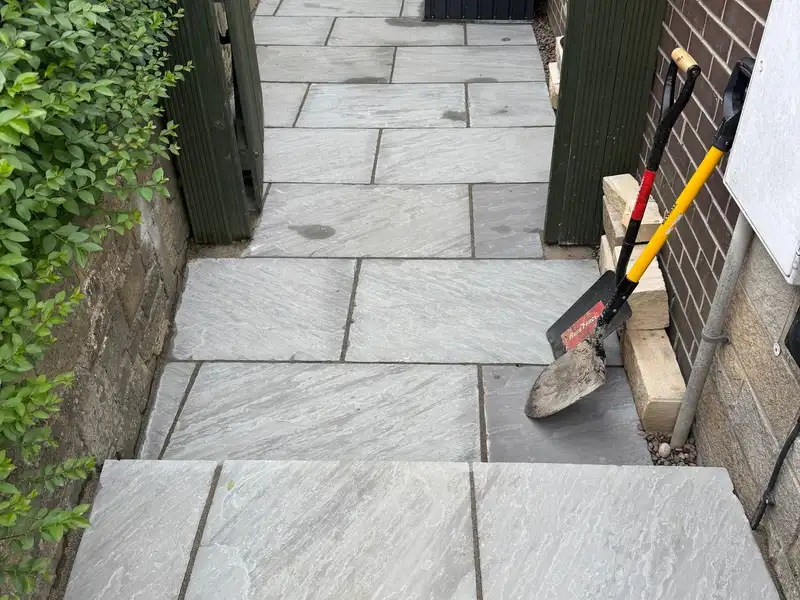
Indian sandstone paving
Wakefield
Natural stone, quarried in India and cut into paving slabs, with every slab a little different in colour and grain. We lay it on a full bed of mortar with a fall away from the house, so the patio stays put and sheds the rain.
We promise to reply to every enquiry within the hour.
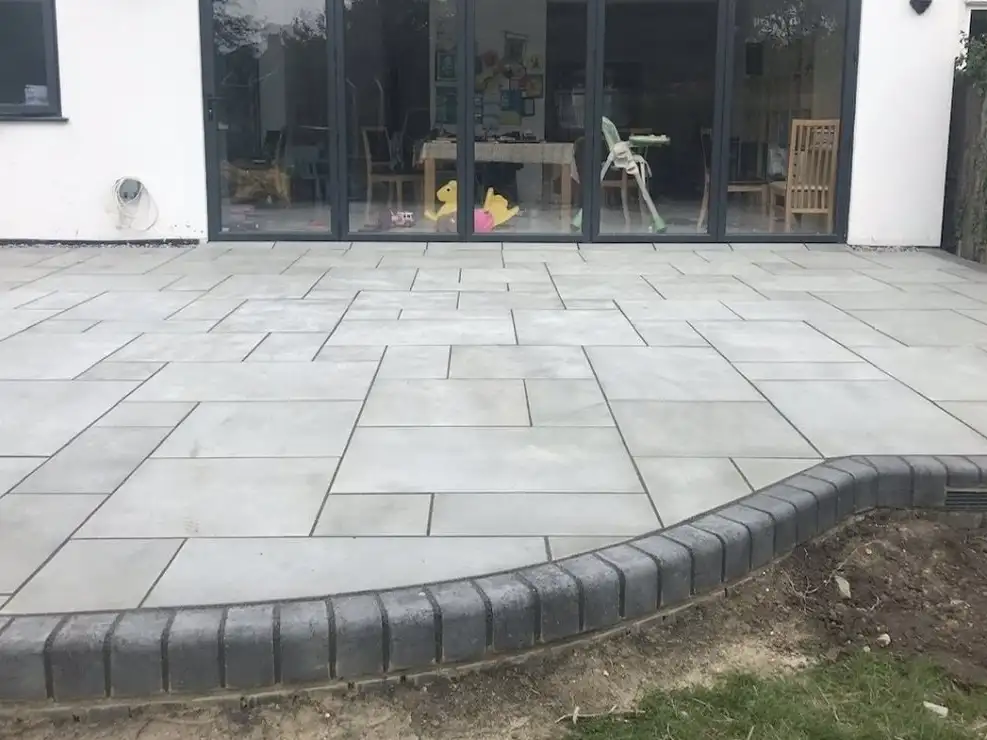
Indian sandstone suits you if you want real stone, with the natural variation in colour and texture that porcelain sets out to copy. Riven slabs give a traditional, textured look; sawn slabs with crisp edges suit a modern house.
If your old patio rocks underfoot, holds water by the back door or turns green and slippery every winter, the cause is usually underneath. Slabs set on a few dabs of mortar move, crack and trap water. We lift the old patio and lay the new stone on a full bed.
Our own employed team does every part of the job. A sandstone patio from us includes:
Indian sandstone comes in a wide range of colours, from cool greys such as Kandla Grey to warm buffs and mixes like Autumn Brown. Most of the Indian sandstone in our projects is grey, with the odd buff.
Riven slabs vary a little in thickness from one to the next, which the full mortar bed takes up. Sawn slabs are calibrated, meaning they’re cut to an even thickness, so they sit flush with tight joints.
We source our Indian sandstone from a range of trade suppliers we work with.
Every patio needs a fall so the rain runs off, and somewhere for that water to go, whether that’s a border, a lawn or a channel drain. We set the levels before the first slab goes down, keeping the finished surface below the damp-proof course of the house.
A patio at ground level in a back garden doesn’t need planning permission. A raised one is treated like decking, so it needs permission if it’s more than 30cm above the ground. The Planning Portal’s decking guide covers the detail, and front gardens follow the same drainage rule as driveways.
Most patios take us 2 to 4 days. The size, the shape of the garden, any steps or walls, and how easy it is to get materials round to the back all play a part. Your written quote gives the start date we’ve agreed with you.
10 year structural guarantee on patios.
Wakefield
Barnsley
Castleford
Pontefract
Harrogate
Doncaster
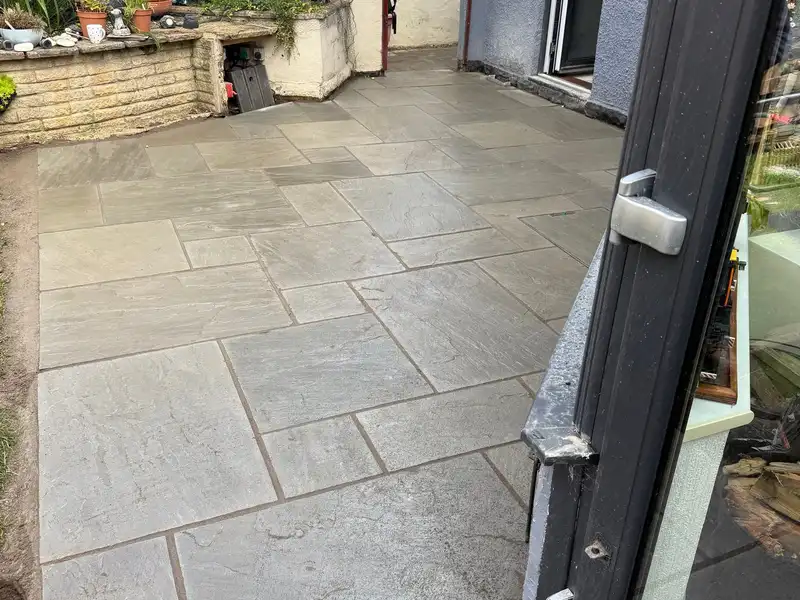
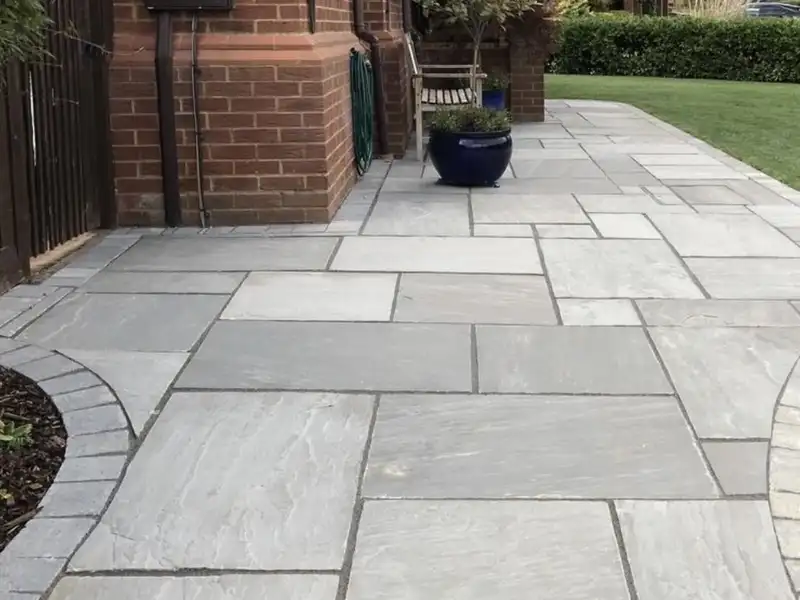
Riven slabs are split along the stone's natural layers, so the surface is textured and the edges are slightly irregular. They suit a cottage garden or a traditional house, and the texture gives good grip.
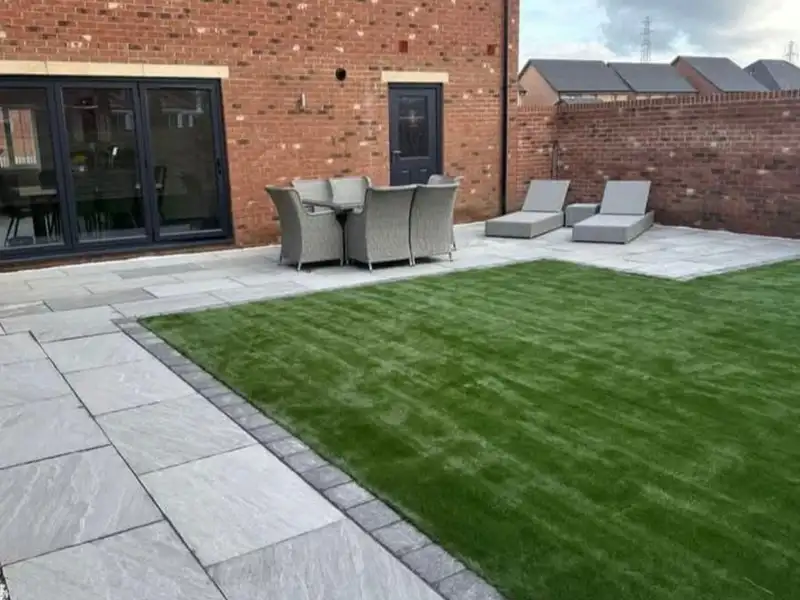
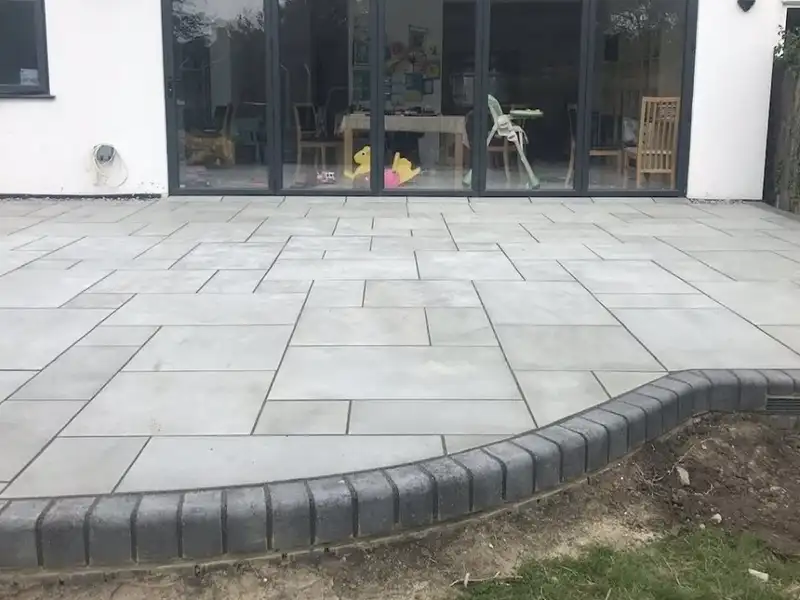
Sawn slabs are cut on all sides, with crisp edges and a smooth, even face. They suit a modern house and sit well next to bifold doors and clean lines.
It doesn't have to be. Sandstone is porous, so a sealer helps keep out stains such as red wine, oil and barbecue fat, and slows down algae. Left unsealed, it weathers naturally and its colours soften over time. Before any sealer goes on, the stone needs to be clean and fully dry.
Any stone patio can grow algae in shade and damp, and sandstone can pick up the small black spots of lichen. A sweep and a wash with a patio cleaner made for natural stone keep it under control. Avoid strong acid cleaners, which can mark sandstone.
Slabs laid on a few dabs of mortar have hollows underneath. They rock, crack when something heavy goes on them, and let water sit under the stone. A full bed supports the whole slab, and the SBR on its back bonds it to the bed, so it stays put.
A resin-based jointing compound that fills the gaps between the slabs and sets hard. It keeps weeds out of the joints and doesn't crumble the way a weak sand and cement joint can. It comes in a range of colours, so the joints can blend in or stand out.
Sandstone gives you natural stone that changes as it ages. Porcelain gives you an even, modern look that stays the same. The patio comparison sets them side by side, and our porcelain patio page covers the other option.
Next step
We promise to reply to every enquiry within the hour.