
Block paving
Leeds
Concrete or clay blocks laid in a pattern and locked together on a compacted base. Block paving takes the weight of family cars, comes in colours and borders to suit the house, and a damaged patch can be lifted and relaid instead of dug out.
We promise to reply to every enquiry within the hour.
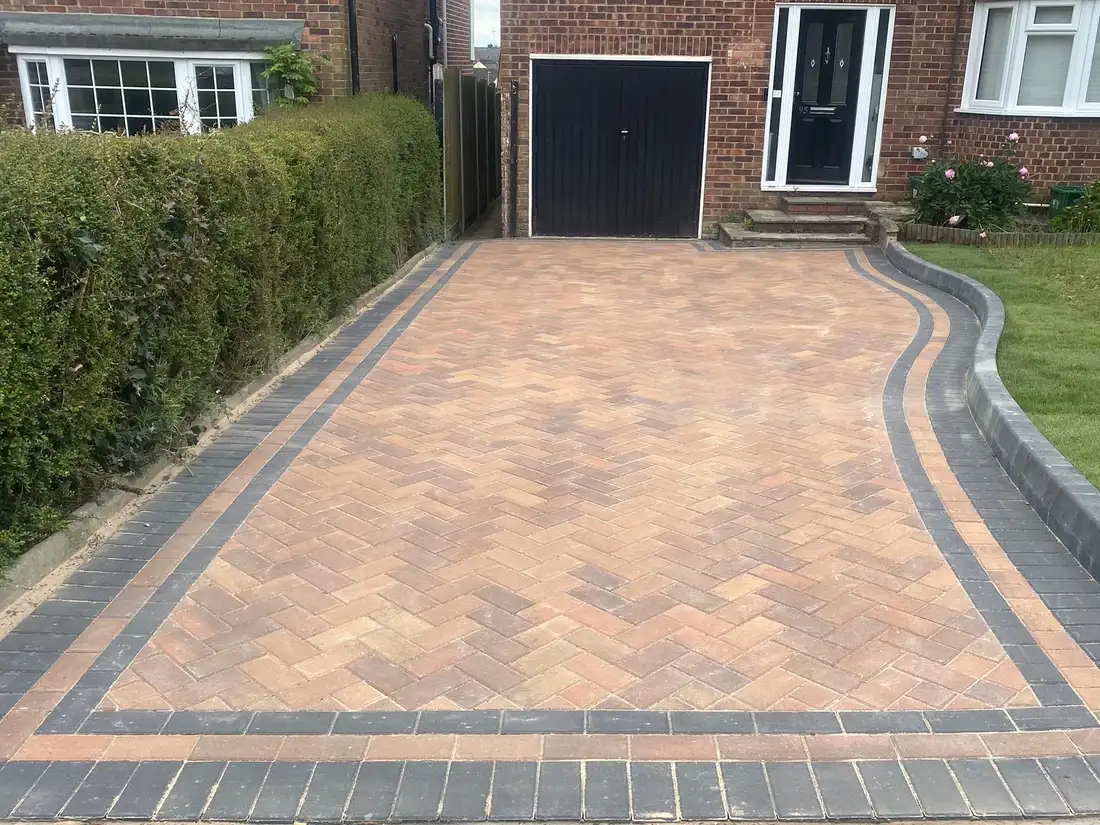
Block paving is made for a drive that works hard: two cars, a van at the weekend, the bins wheeled out every week. The blocks lock together as they’re compacted, so the load spreads down into the base rather than pressing on one spot.
It’s also the surface to choose if you want a pattern, or a border that picks up the brick of the house. And if there are pipes or cables under the drive that may need getting at one day, blocks can be lifted and the same ones laid back, so the repair doesn’t show.
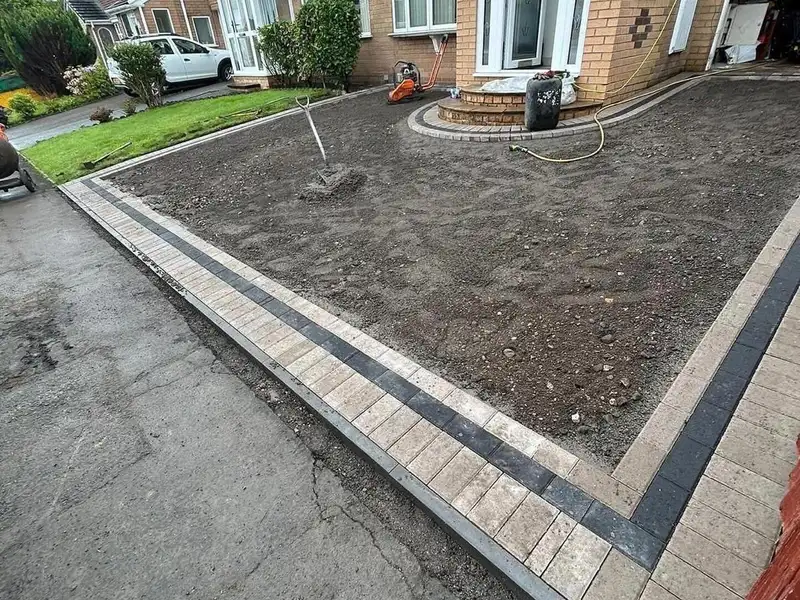
If your drive has dips where the cars park, blocks that rock underfoot or puddles that sit for days, the base has usually given way. New blocks on a tired base go the same way, so we start underneath.
Our own employed team does the whole job, from the first dig to the final sweep. A block paved drive from us includes:
Most block paving is concrete, made in a wide range of colours, mixes and sizes. Clay pavers are fired like bricks, so their colour runs all the way through.
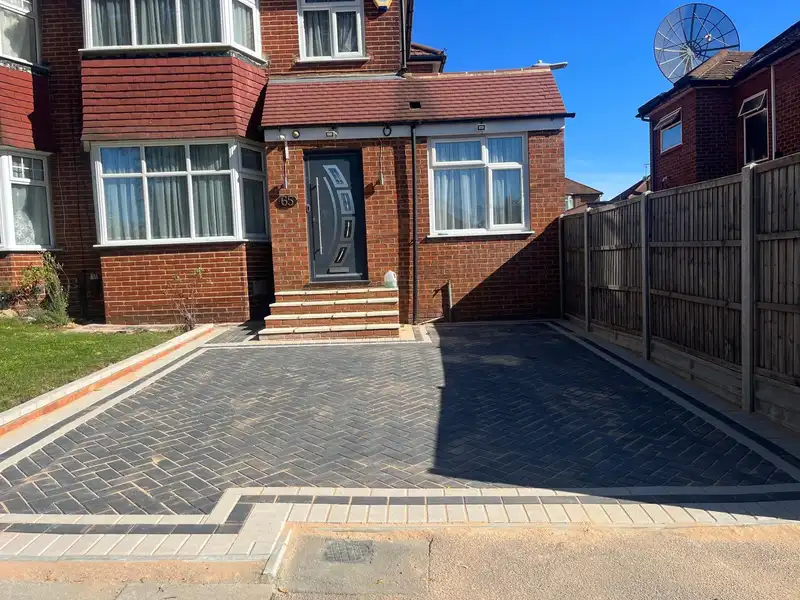
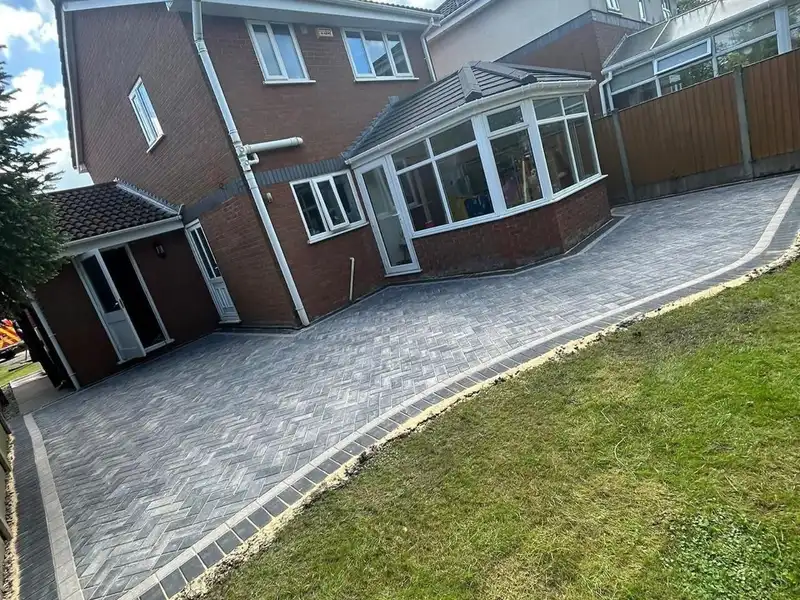
The pattern matters as much as the colour. Herringbone is the strongest for a drive, and you’ll see it on many of the drives in our projects, often framed with a charcoal border. Blends such as brindle and autumn mix several shades in the same pack, which keeps a large drive from looking flat.
Most of the drives we lay are Plasmor Plaspave, in 50mm and 60mm blocks and occasionally 80mm. If you have a particular block in mind, we can source that instead.
Standard concrete blocks don’t let much water through, so a block paved drive is laid with a fall that carries the rain to a drain, a channel or a border. Getting the falls right is part of the groundwork, not something left to the last row of blocks.
For a front garden in England, paving more than five square metres with a surface water can’t drain through needs planning permission, unless the rain runs off onto a lawn or border. Permeable block paving, with wider joints over a free-draining base, needs no permission, and it’s something we lay. The Planning Portal’s guide has the detail.
If the drive needs a new or wider dropped kerb, we make the application to the council for you. Unless the council has its own approved contractor for it, we build the crossing too. Our town pages set out the local rules.
Most drives take us 3 to 5 days, and the groundwork is the biggest part of that. A herringbone drive with curves and a double border means more cutting than a straight run, so the design plays a part too. Your written quote gives the start date we’ve agreed with you.
15 year structural guarantee on driveways.
Leeds
Selby
Castleford
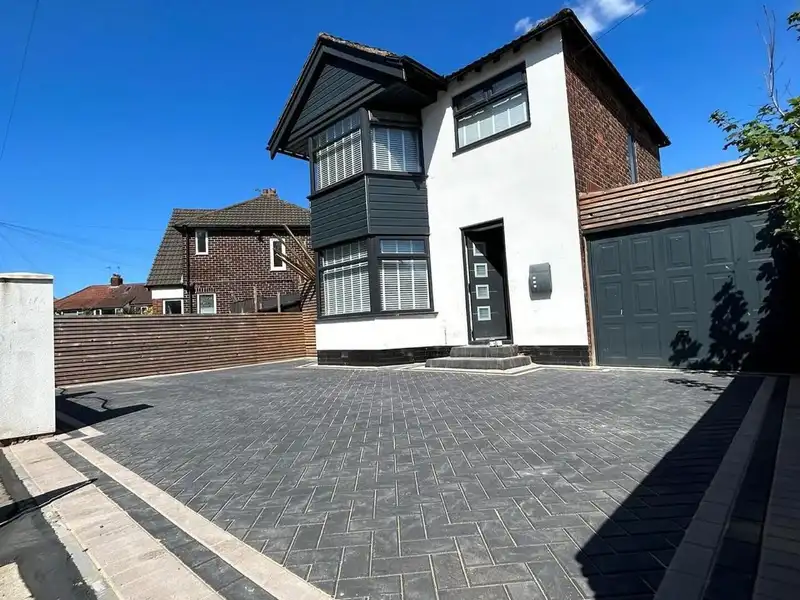
Leeds
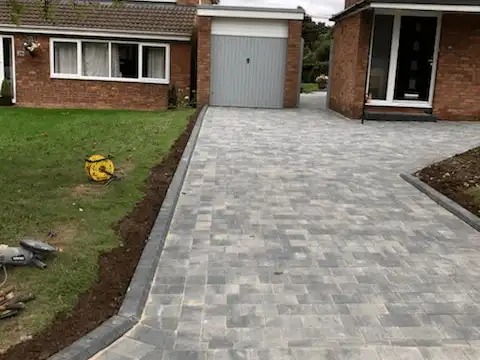
Harrogate
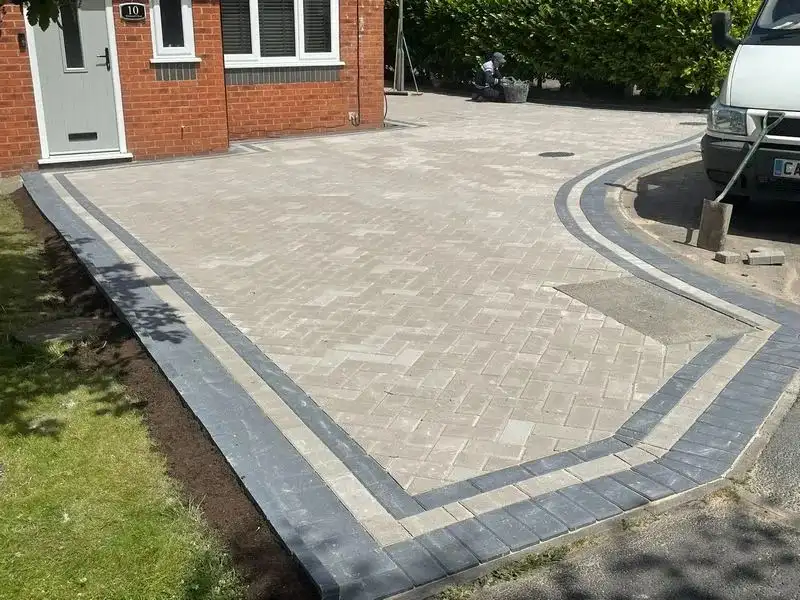
York
Herringbone. Each block is held by its neighbours in two directions, so it stands up to cars turning and braking better than patterns where the joints run in straight lines. Stretcher bond and basketweave look good on paths and patios, where nothing heavier than a wheelbarrow goes over them.
Some will, but they grow from seeds that blow into the sand in the joints, not up from the ground, because the compacted base underneath leaves them nothing to root into.
Keeping the joints full and giving the drive a sweep now and then keeps them down. Spot-treat the odd one with weedkiller rather than digging it out.
Yes, but a pressure washer blasts the sand out of the joints as well as the dirt. Once the drive has dried, brush fresh kiln-dried sand back in, so the blocks stay locked together.
Straight away. Block paving doesn't need to set or cure, so once the blocks are compacted and the joints are filled, the drive is ready for the car.
Concrete blocks soften in colour over the first few years as the surface weathers. Clay pavers get their colour from the clay itself, so they hold it for longer. Blended colours such as brindle and autumn mixes show wear and marks less than a single shade.
In a front garden in England, you need it to lay more than five square metres of standard blocks unless the rain drains onto a lawn or border. Permeable block paving needs none. The Planning Portal sets out the rule.
Next step
We promise to reply to every enquiry within the hour.