
Porcelain patio
Selby
Outdoor porcelain is fired so hard that it soaks up almost no water. It keeps its colour, spills wipe off, and it doesn't need sealing. Laid on a full bed with the right fall, it gives a crisp, even patio that needs very little looking after.
We promise to reply to every enquiry within the hour.
Porcelain suits a modern house, and anyone who wants a patio that looks tidy with very little upkeep: no sealing, no staining from barbecues or red wine, and no fading. It’s a good fit for busy gardens with children, dogs and plenty of use.
It’s less forgiving than stone to lay, though. Water can’t soak into it at all, so a patio laid flat or with hollows underneath holds puddles and works loose. With porcelain, the laying matters as much as the slab.
Our own employed team does every part of the job. A porcelain patio from us includes:
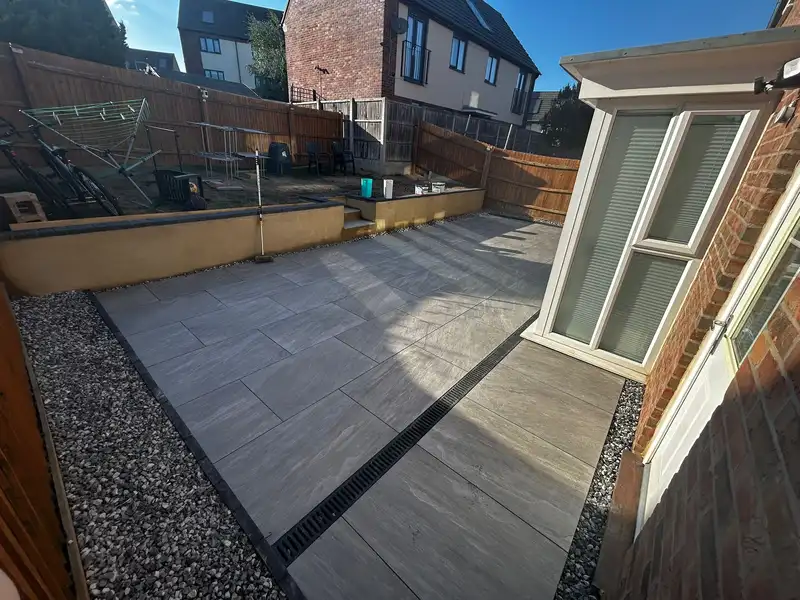
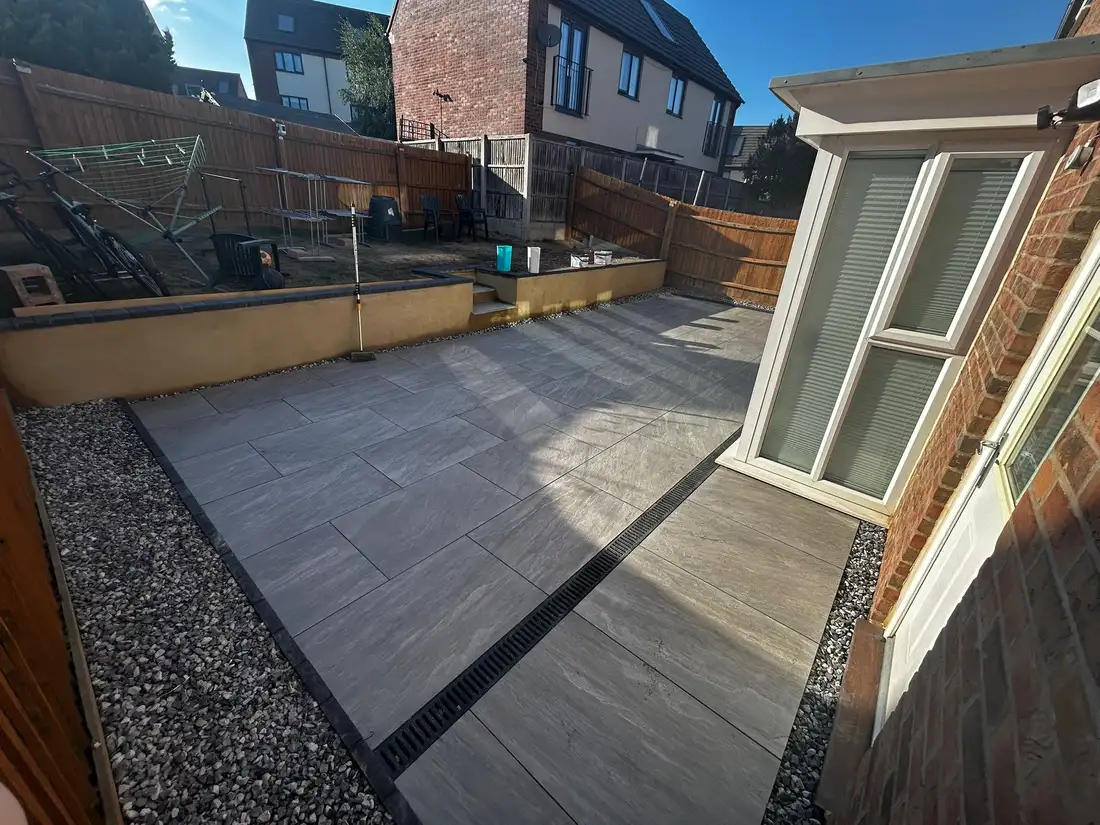
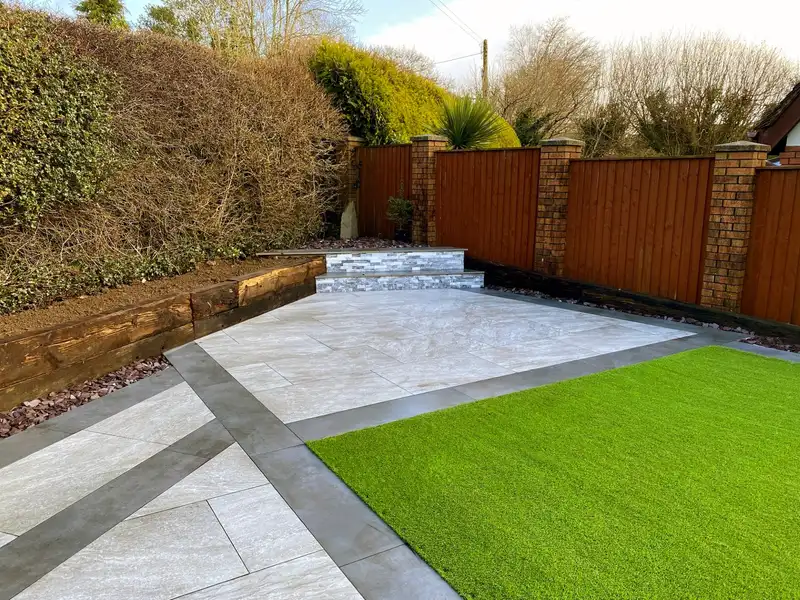
Outdoor porcelain is usually 20mm thick, far thicker and stronger than an indoor tile. It’s made to look like natural stone, slate, concrete, marble or timber, with a far more even colour than real stone. The patios in our projects include a pale marble-effect patio framed with darker bands, and the grey one at the top of this page.
We source our porcelain from a range of trade suppliers we work with.
Because porcelain lets no water in, the fall and the drainage do all the work. The patio is laid to carry rain away from the house, and the water needs somewhere to go: a border, a lawn, or a channel drain like the slot drain along the house in the photo above.
A patio at ground level in a back garden doesn’t need planning permission. A raised one is treated like decking, so it needs permission if it’s more than 30cm above the ground. The Planning Portal’s decking guide covers the detail, and front gardens follow the same drainage rule as driveways.
Most patios take us 2 to 4 days. Porcelain takes a little longer to lay than sandstone, because it’s harder to cut and every cut needs a diamond blade. Your written quote gives the start date we’ve agreed with you.
10 year structural guarantee on patios.
Selby
Selby
No. It absorbs almost no water, so stains have nowhere to soak in, and its colour is fired on, so it doesn't fade. A wash with warm soapy water and a stiff brush is usually all it needs.
Outdoor porcelain is made with a textured, slip-resistant face, unlike the smooth tiles used indoors. Like any patio, it can get slippery where algae builds up in shade, so keep it swept and wash it down now and then.
Porcelain itself stands up to frost well, because there's almost no water in it to freeze and expand. What cracks a patio is a hollow underneath, which is why we lay every slab on a full bed of mortar.
Porcelain is so dense that mortar can't grip it on its own. Laid straight onto the bed, a slab can come loose and start to rock. The SBR coat on the back of every slab bonds it to the mortar, so it stays fixed.
Yes. Porcelain copes with a pressure washer well. Keep the jet moving rather than holding it close to the joints for long.
Porcelain gives you an even, modern finish that stays the same for years. Sandstone gives you natural stone that changes as it ages. The patio comparison sets them side by side, and our Indian sandstone page covers the other option.
Next step
We promise to reply to every enquiry within the hour.