
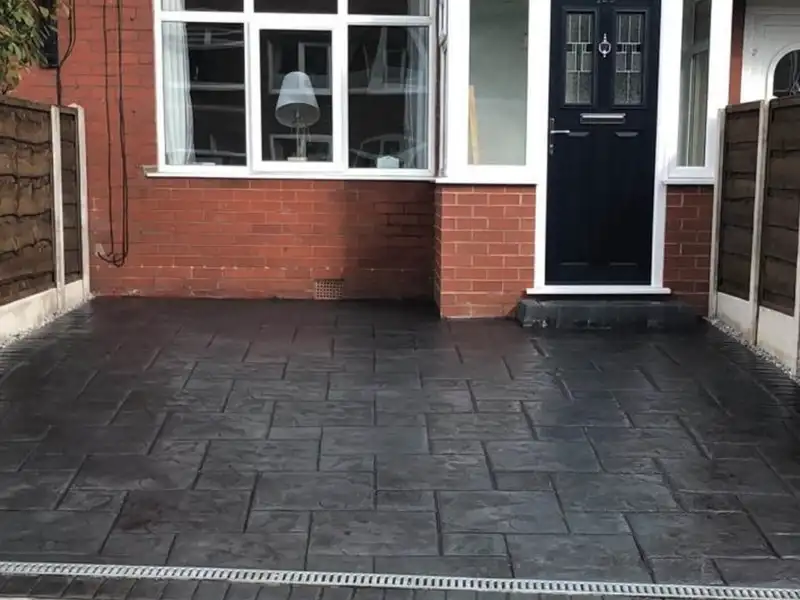
Imprinted concrete driveway
Morley, Leeds
Concrete laid as one solid slab, then coloured and stamped while it's still soft to look like stone, slate, setts or brick. You get a patterned drive with no loose blocks or joints to weed, and the slab spreads the weight of the car across the whole area.
We promise to reply to every enquiry within the hour.
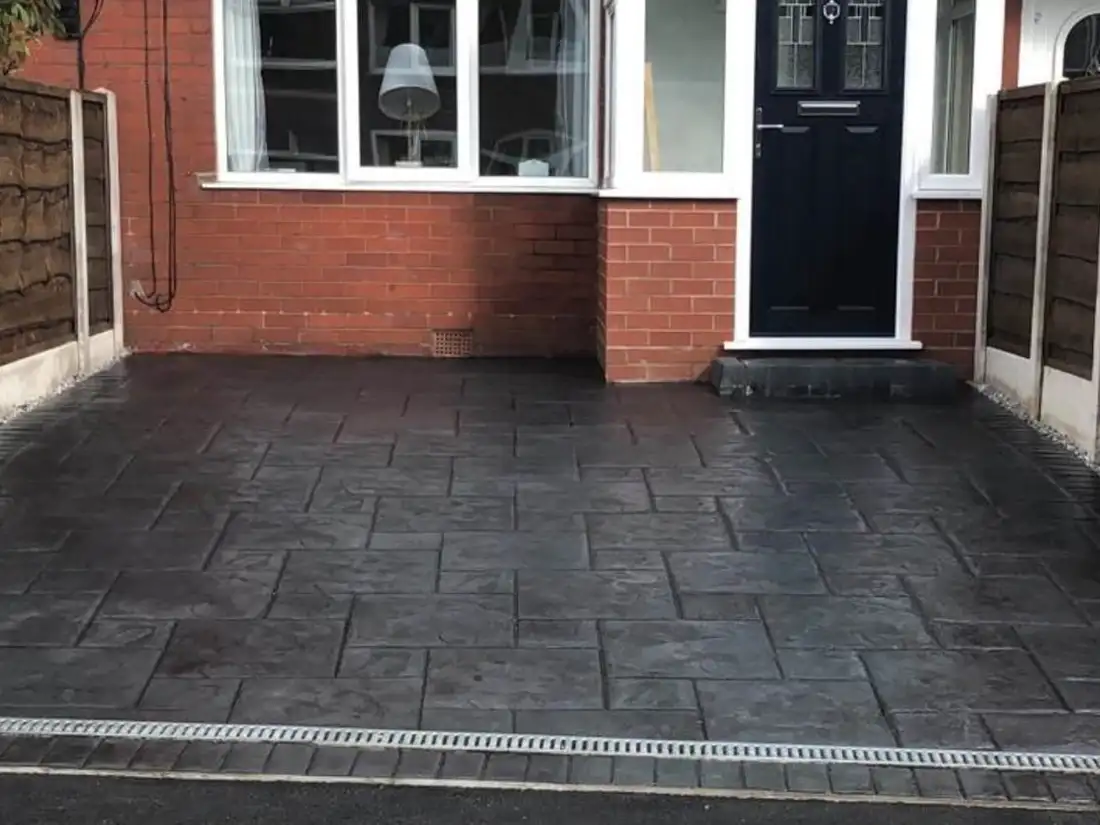
Imprinted concrete suits you if you like the look of stone or setts but don’t want joints to keep topped up and weeded. It’s one solid slab, so there are no loose blocks to rock or sink where the car turns.
It does ask for a little looking after: a reseal every few years keeps the colour and the finish. And like any concrete, it’s harder to patch invisibly than a drive made of separate blocks. We’d rather you hear that now than find it out later.
Our own employed team does every part of the job, start to finish. An imprinted concrete drive from us includes:
The colour usually comes from a hardener spread over the surface of the wet concrete, which also toughens the top. A release agent in a second colour stops the mats sticking and settles into the pattern, picking out the joints, so a grey slab can have charcoal joints, or a buff one brown.
Patterns run from random stone slabs and cobbles to setts, slate and brick. The sealer goes on last. It protects the colour, stops oil and dirt soaking in and gives the surface a slight sheen.
Water can’t soak through concrete, so the slab has to be laid with falls that carry the rain to a channel drain, a gully or a border. The Morley drive at the top of this page has a channel drain across the front to catch the water before it reaches the pavement.
For a front garden in England, paving more than five square metres with a surface water can’t drain through needs planning permission, unless the rain runs off onto a lawn or border. The Planning Portal’s guide explains the rule, and at the site visit we’ll tell you how it applies to your drive.
If the drive needs a new or wider dropped kerb, we make the application to the council for you. Where the council doesn’t use its own approved contractor, we build the crossing too, and our town pages set out each council’s rules.
Most drives take us 3 to 5 days. The groundwork comes first. Then the concrete is poured, coloured and stamped in one go while it’s still workable, so pour day needs to be dry and free of frost. You can drive on it after 48 hours. Your written quote gives the start date we’ve agreed with you.
15 year structural guarantee on driveways.
Morley, Leeds
Concrete shrinks slightly as it cures and moves a little with the seasons, so every slab needs somewhere to crack. That's what the control joints are for. They're cut into the surface so any movement follows a straight line where it won't show. A well-built sub-base stops the bigger cracks that come from the ground settling.
Every few years, depending on how much wear the drive gets and how much sun it catches. The sealer is what keeps the colour rich and stops stains soaking in. A clean and reseal brings a tired drive back up, and it's a much smaller job than relaying.
A freshly sealed surface can be. An anti-slip grit can be mixed into the sealer to give the surface more grip, which is worth having on a sloping drive or by a front door.
Cleaning and resealing deal with most wear. A damaged section can be cut out and relaid, but new concrete rarely matches an older, weathered slab exactly, so a repair tends to show. That's the main trade-off against block paving, where the same blocks go back down.
In a front garden in England, you need it for more than five square metres unless the rain runs off onto a lawn or border, because water can't drain through concrete. The Planning Portal sets out the rule.
The common ones are random stone slabs, cobbles, setts, slate and brick, each in a range of colours, with a second colour pressed into the pattern to pick out the joints. A border stamped in a different pattern can frame the drive. We'll talk through options at the site visit.
Next step
We promise to reply to every enquiry within the hour.