Tarmac driveway
Selby
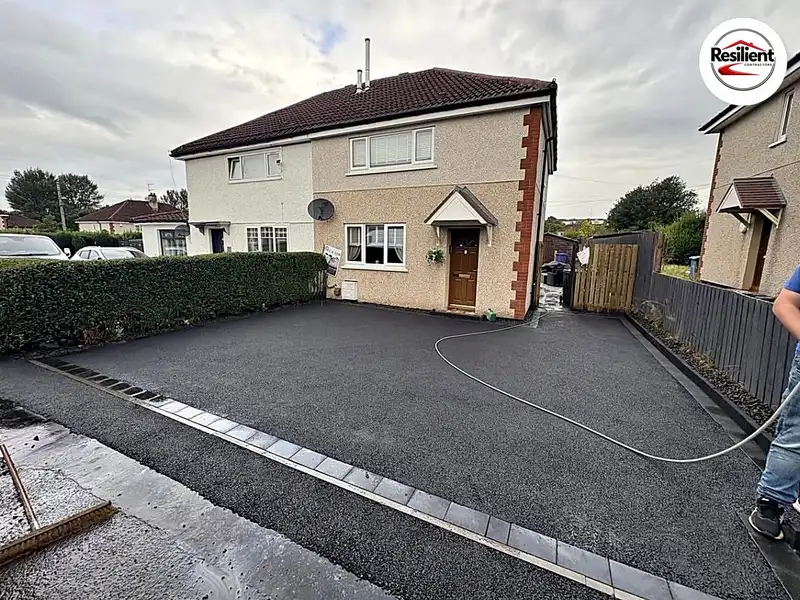
A plain, hard-wearing surface, laid hot and rolled smooth. Tarmac covers a long or wide drive without fuss, and a block edge in a second colour gives it a crisp finish and holds it in shape.
We promise to reply to every enquiry within the hour.
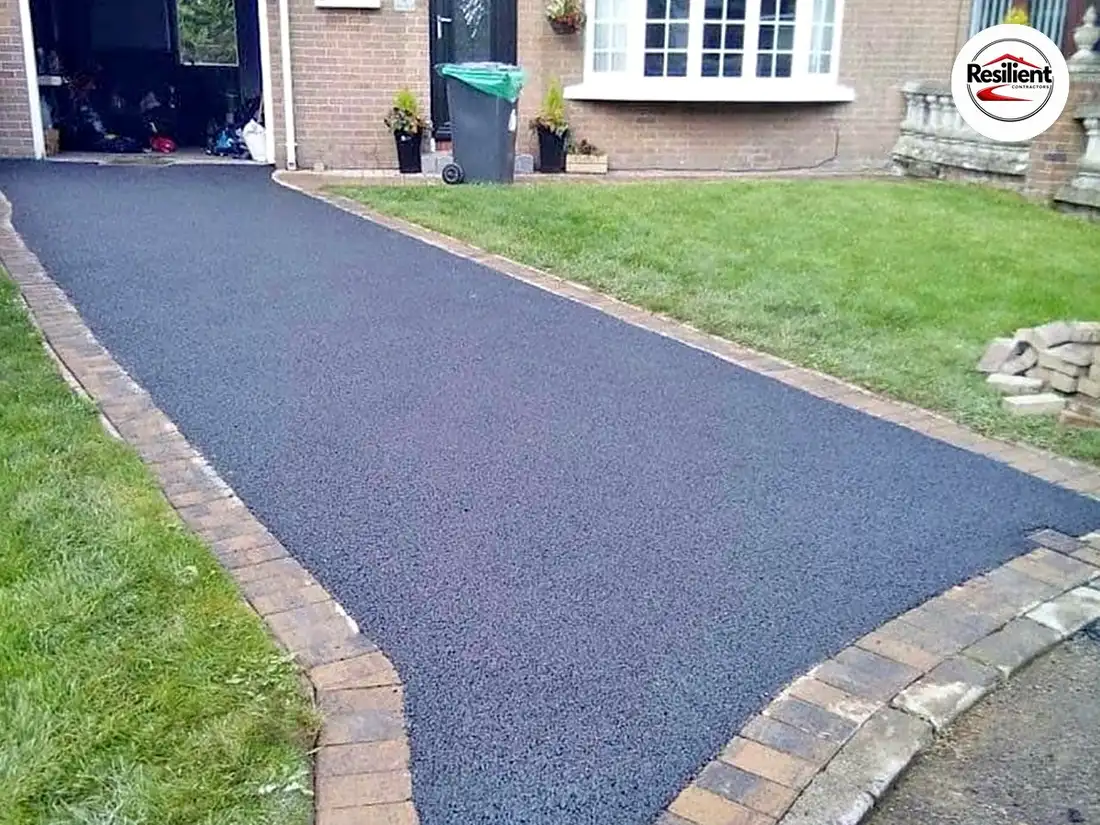
Tarmac suits a drive that needs to be hard-wearing and tidy rather than patterned: a long run up to a garage, a wide frontage that takes several cars, or a shared drive with plenty of coming and going. With no joints and no pattern, it’s one of the simplest surfaces to live with.
If your old tarmac has cracked, broken up at the edges or sunk where the cars stand, the base underneath has usually failed. A fresh layer on top hides it for a while, then the cracks come back through. So we dig the old drive out and build it again from the bottom up.
Our own employed team does every part of the job, start to finish. A tarmac drive from us includes:
Tarmac is the everyday name for asphalt: crushed stone bound together with bitumen, delivered hot and laid before it cools. We lay it in two layers: a coarser base course for strength, then a finer surface course that gives the smooth, closed finish.
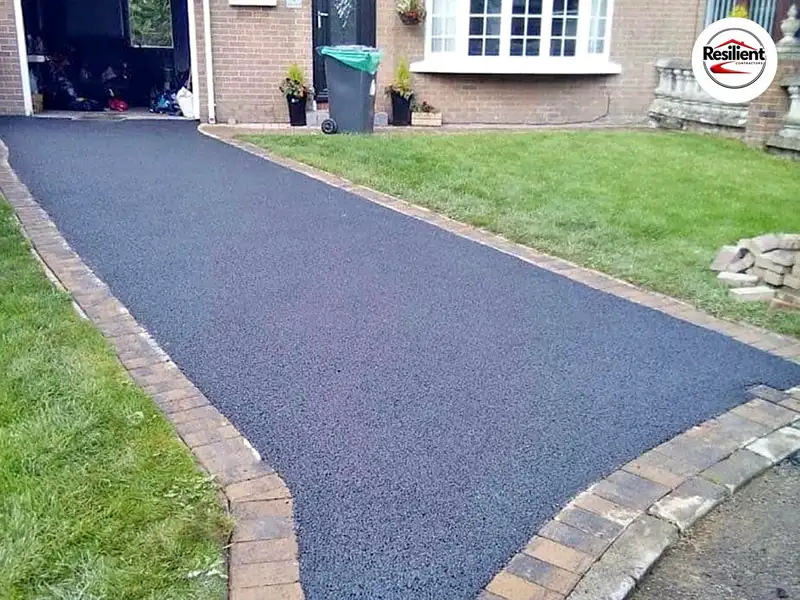
Black is the standard colour. The edge is where you can add some character: a row of blocks in brindle, grey or buff frames the drive, like the York drive at the top of this page, and keeps the edges from breaking away.
Standard tarmac doesn’t let water through, so the drive needs a fall that carries the rain to a drain, a channel or a border. We set the levels during the groundwork, before any tarmac arrives.
For a front garden in England, surfacing more than five square metres with something water can’t drain through needs planning permission, unless the rain runs off onto a lawn or border. Porous tarmac, which lets water soak through, needs none. We lay it as the finished surface of a drive, as well as under our resin bound drives. The Planning Portal’s guide has the detail.
If the drive needs a new or wider dropped kerb, we make the application to the council for you. We then build the crossing ourselves, unless the council has its own approved contractor, and our town pages explain the local rules.
Most drives take us 3 to 5 days, and most of that is the groundwork. The tarmac itself goes down quickly once the base is ready, but it can’t be laid in the rain or on a frozen base, so the forecast can move the day. Your written quote gives the start date we’ve agreed with you.
15 year structural guarantee on driveways.
Selby
York
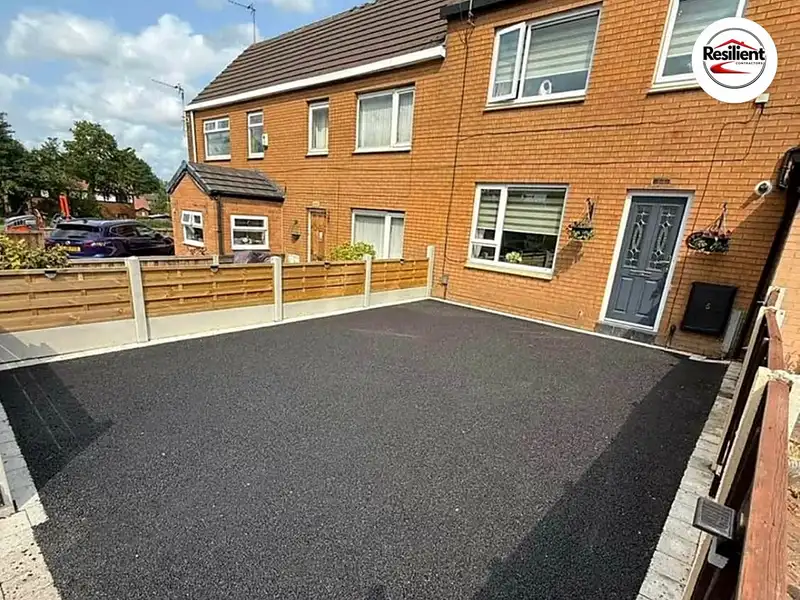
Harrogate
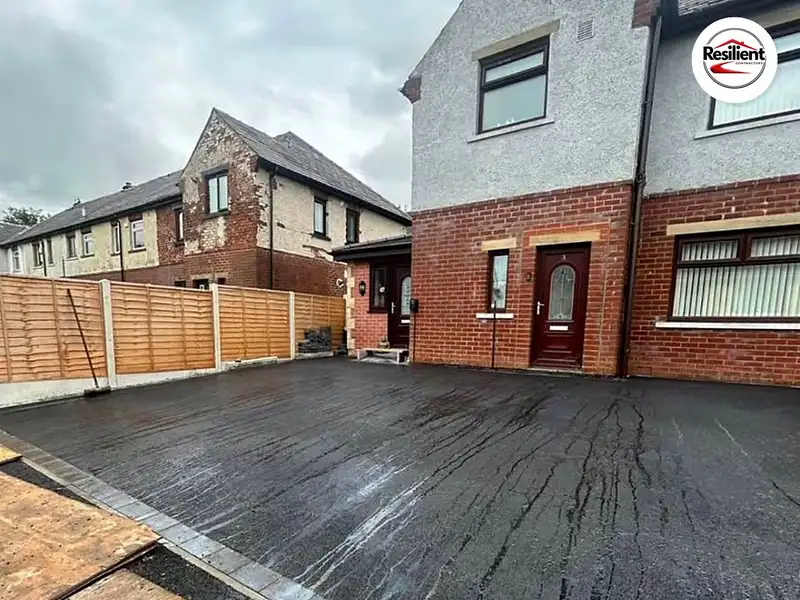
Goole
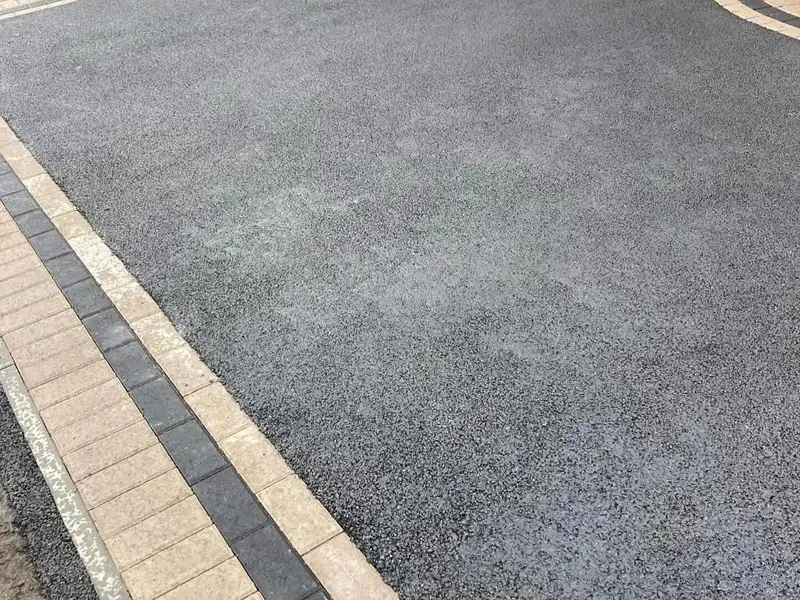
Harrogate
You can drive on it after 48 hours. For the first few weeks, try not to turn the steering wheel while the car is standing still, and keep anything with a narrow foot, such as a motorbike stand or a caravan jack, off the surface. New tarmac stays slightly soft until it has fully hardened, especially in warm weather.
A little. Tarmac is held together by bitumen, which softens as it warms up, so on the hottest days a new drive can take marks from tyres turning on the spot. It hardens over the first few months and gets much less prone to it.
Only if the old surface is sound, level and well supported. Cracks and dips in an old drive tend to come back through a new layer. We look at it at the site visit and tell you straight whether an overlay will last or the old drive has to come out.
For a front garden in England, yes if it's over five square metres of standard tarmac and the rain can't run off onto a lawn or border. Porous asphalt lets water through, so it needs no permission. The Planning Portal explains the rule.
Sweep it now and then and pull out any weeds along the edges before they take hold. Clean up petrol, diesel and oil spills quickly, because they dissolve the bitumen that holds the surface together.
Tarmac is plainer, with no joints to keep topped up, and it's quick to lay over a large area. Block paving gives you patterns and borders, and it can be lifted and relaid in patches. The driveways comparison puts all four surfaces side by side.
Next step
We promise to reply to every enquiry within the hour.