
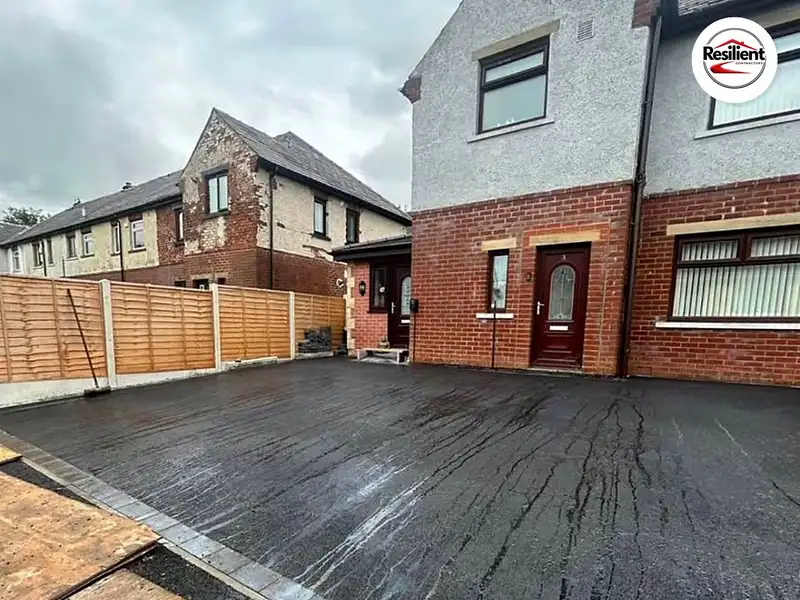
Tarmac driveway
Goole
Goole was built from scratch as a port, a grid of brick terraces on flat land that sits below the Ouse at high tide. Drainage, drainage board rules and front walls all shape a new drive, patio or fence here.
We promise to reply to every enquiry within the hour.
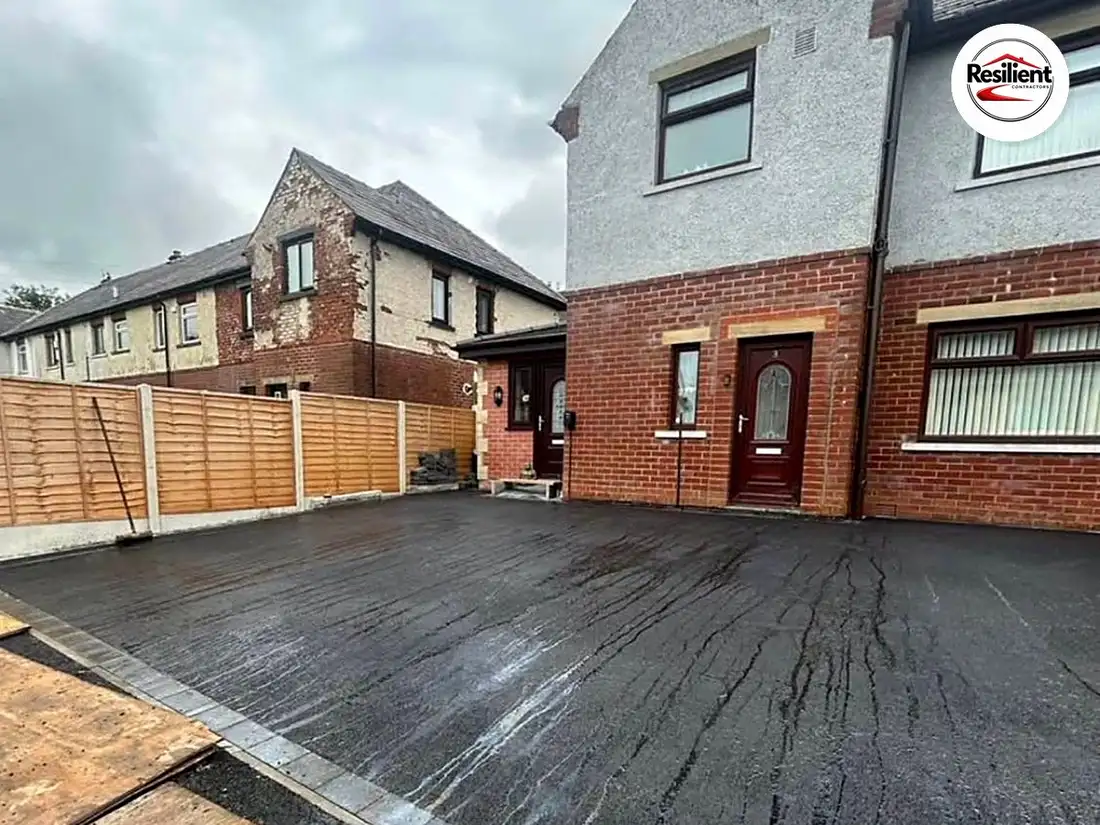
Goole was laid out from 1831 by the Aire and Calder canal company, a whole town built by one business to serve its port. Its streets are a tight grid of terraces in deep red-brown brick and slate, mostly built at the back of the pavement with walled yards behind, and large front gardens are rare.
The census bears that out: 37.6% of households in Goole’s two wards live in a terrace, against 23% across England, rising to 46.7% in Goole South. More than a quarter of the homes went up before 1900.
The bigger Victorian houses, with front gardens, are on Hook Road and East Parade, where sea captains and company managers once lived. Newer housing followed, with houses going up around Woodland Avenue and Nab Drive by 1949.
Goole is flat, at 2 to 4 metres above sea level, which puts it below the Ouse at spring high tides, so the town depends on its flood banks. The defences along the Ouse and the Dutch River are built to a 1 in 200 standard. A breach is judged unlikely, but one would flood almost the whole town, and 96.4% of the land inside Goole’s development limit is in Flood Zone 3. The December 2013 tidal surge flooded Old Goole but not Goole itself.
Beneath most of the town is alluvium, a soft, compressible silty clay, and to the west lies warp, land once deliberately flooded so the river would lay down silt, which raised the ground by as much as a metre and a half. Where the ground is that heavy, a permeable drive needs a drain pipe laid in its base, as the government’s front garden guidance advises.
The town’s own drains matter just as much. Goole relies on old combined sewers and a dozen Yorkshire Water pumping stations, and in August 2011 more than 600 properties flooded inside after intense rain.
North of the Dutch River, the town falls within the Goole and Airmyn Internal Drainage Board’s district. The board’s consent is needed to send water into one of its drains, or to build anything, fences included, within 9 metres of one. Within 16 metres of the tidal river or its defences, most work needs an Environment Agency permit.
East Riding of Yorkshire Council’s highways team approves new vehicle crossings, and a crossing onto an A, B or C road needs planning permission as well. The council’s last published guidance asked for a parking space at least 4.8 metres deep, with the car parked straight on and any gates opening inwards.
Anyone digging in the road needs the council’s licence, street works accreditation and £5 million public liability cover. The council’s current pages say little more about the process, so we’ll confirm the latest steps when we apply for you.
Goole’s conservation area, designated in November 2011, comes in three parts: the town centre around Aire Street, the Clock Tower and Boothferry Road, then Hook Road, and South Dock. Its appraisal wants the decorative front garden walls and fences, as on Hook Road, preserved, with repairs in dark red brick, or a darker brick of the same size where there’s no exact match.
Goole’s only Article 4 direction, made in April 2026, covers small houses in multiple occupation, not gardens, walls or fences. In the conservation area, though, taking down a wall, gate or fence a metre or more high beside a road needs planning permission, and work on a tree with a stem over 75mm across needs six weeks’ notice.
Goole
Only with room for a parking space at least 4.8 metres deep, under the council's last published rules, with the car parked straight on. Many terraces built at the back of the pavement don't have that.
Yes, if the surface is permeable or drains onto a lawn or border. In Goole that matters, because the town's drains are old and pumped, and on its clay a permeable drive needs a pipe in its base.
Taking it down needs planning permission if it's a metre or more high beside the road. The council's appraisal wants the decorative walls kept, with repairs in dark red brick.
Within 9 metres of a drainage board drain, you need the board's consent, which is free. Within 16 metres of the tidal river or its defences, you need an Environment Agency permit, unless the fence is post-and-rail or post-and-wire.
Next step
We promise to reply to every enquiry within the hour.