
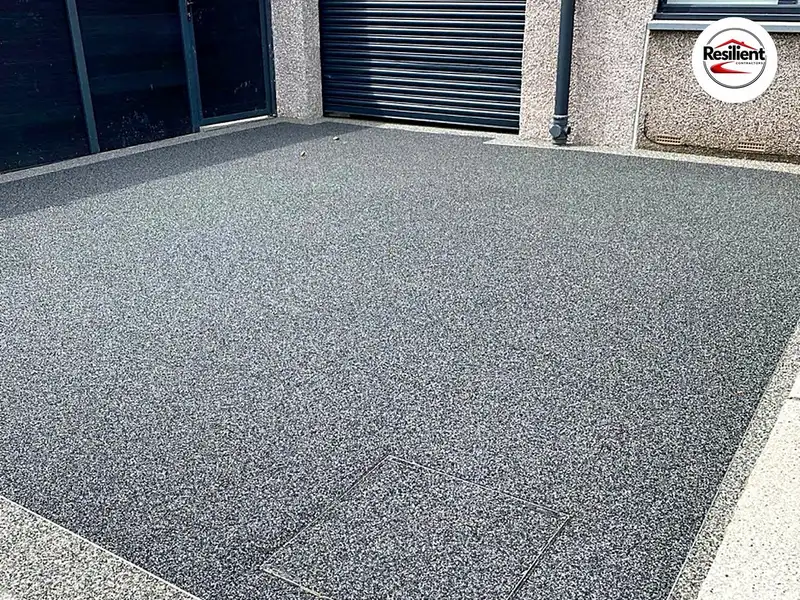
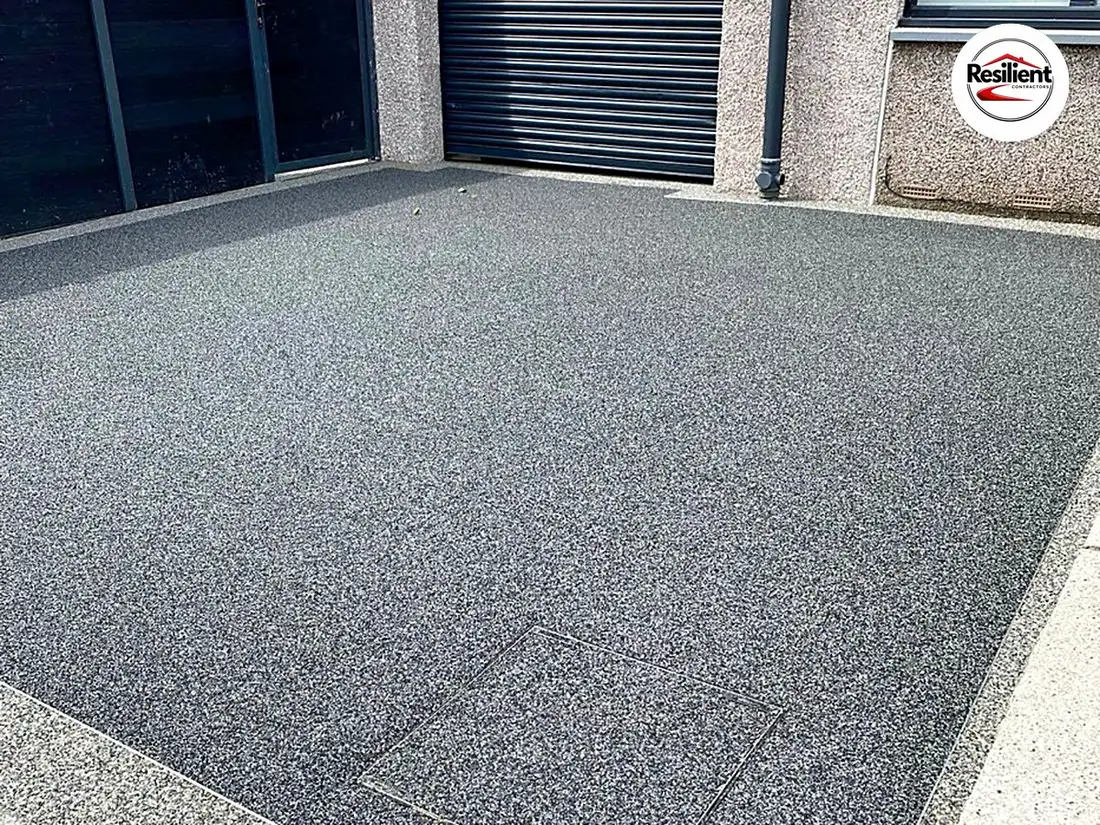
Resin bound driveway
Pontefract
Pontefract stands on high ground where the coalfield meets a limestone ridge, a castle town ringed by post-war semis. Some of its ground drains well and some doesn't, and its conservation areas care a great deal about front walls.
We promise to reply to every enquiry within the hour.
Half of Pontefract’s households live in a semi-detached house, 49.6% against 31.5% across England, while terraces account for only 14.5%. Roughly a third of its homes went up between 1945 and 1972, and more than a third of households have two or more cars.
Most of the town is red brick, with stone or render saved for older and grander buildings, and front gardens tend to be small. In the historic core around Micklegate and Castle Chain, terraces stand right on the pavement, and Northgate has late-Victorian brick terraces. On The Mount, red-brick villas sit behind low front walls and hedges, while around Button Park large gardens hide behind high brick walls. More homes are coming, with 240 allocated at Holme Farm in Carleton.
Pontefract sits where the Coal Measures to the west meet the Magnesian Limestone ridge to the east, and the limestone forms the hills the town is built on, with Wash Dyke cutting through the spur that held the medieval town. Button Park is raised, Friarwood Valley sunken, and sandstone cliffs line Dark Lane.
The ground drains unevenly. Across the limestone country, 55% of soils drain freely but 27% are slowly permeable and wet through winter, and the limestone has bands of clay and marl. Government guidance says a permeable drive on clay may need an overflow to the drains, and one steeper than 1 in 20 may not suit permeable surfacing.
The Environment Agency issues flood warnings for homes along Wash Dike, and the council’s flood strategy flags Lady Balk and Eastbourne as at significant risk from surface water. Pontefract is also one of the district’s critical drainage areas. Wakefield’s local plan steers people away from large non-porous hard standings and counts permeable paving as sustainable drainage.
You apply to Wakefield Council online or by phone, its highways team inspects and approves, and later it inspects the finished crossing and sends a letter to keep for when you sell. Finish the drive before the kerb, give a pebble drive a 2-metre strip of hard standing at the road, and drain a drive that slopes towards the pavement, because the council treats water running onto the footway as illegal. Moving a lamp post or other obstruction is at your cost, or can mean refusal.
The council doesn’t build it: you choose a contractor holding street works cards and public liability insurance, and working without a permit brings fines. Classified roads, including Carleton Road, Ferrybridge Road, Knottingley Road and Southgate, need planning permission first. We fill in the council’s forms for you, and we build the crossing ourselves.
Pontefract has four conservation areas: Pontefract Castle and the Market Place, both from 1969, Friarwood and Button Park, from 2010, and The Mount, from 2006. None has an Article 4 direction.
The appraisals still guard boundaries closely. On The Mount, front hard standings and lost walls and hedges are named as the main threat, and the council presumes against both. Button Park’s high walls and stone gate posts are part of its character, and around the castle even the way Southgate’s sandstone wall is repointed matters. Taking down a wall, gate or fence a metre or more high beside a road in any of them needs planning permission.
Pontefract
Pontefract
Pontefract
Pontefract
Pontefract
Not if it's permeable, or drains onto a lawn or border. You do for a new crossing onto a classified road such as Carleton Road, and for taking down a front wall a metre or more high in a conservation area.
We do, after Wakefield Council has approved it. The council lets you pick the contractor, as long as it holds street works cards and insurance, then inspects the result and sends a letter you'll need when you sell.
A permeable surface needs no permission, but the council's appraisal sees lost front walls and hedges as the biggest threat to The Mount and presumes against them. Talk to the council before planning an opening.
It depends on the street. Some Pontefract ground drains freely and some is clay, so it's worth testing first. On clay, an overflow to the drains helps, and water must never run onto the footway.
Next step
We promise to reply to every enquiry within the hour.