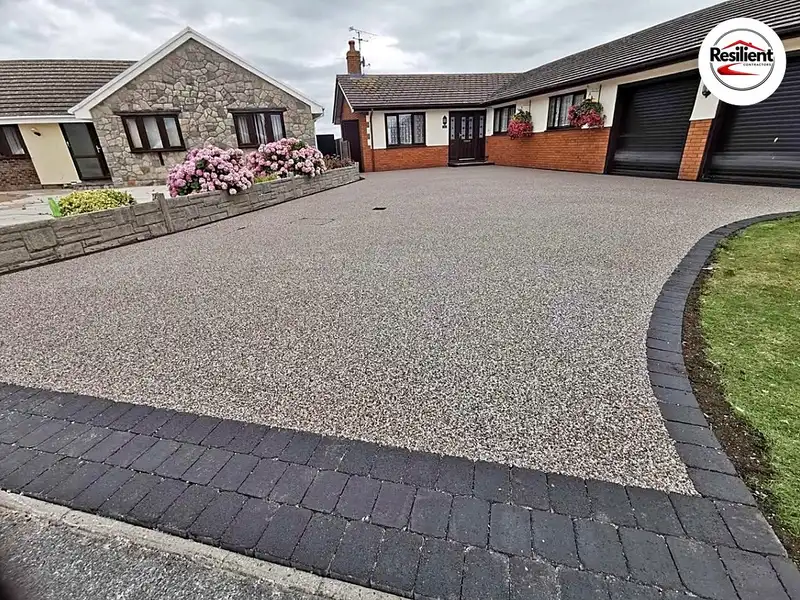
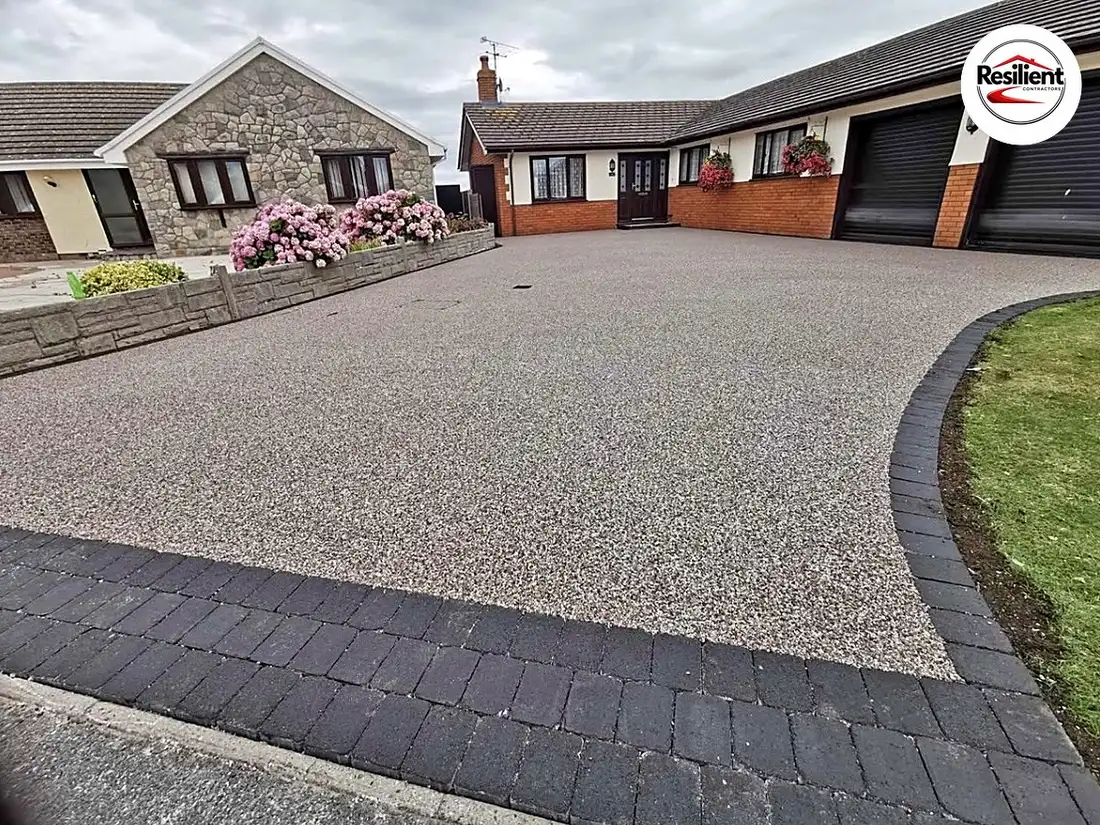
Resin bound driveway
York
York grew fastest between the wars, around Victorian terraces built for railway, army and factory workers. The city is flat, much of it sits on clay, and the council sets out its rules on drainage, dropped kerbs and front walls in unusual detail.
We promise to reply to every enquiry within the hour.
York has 94,410 homes. A quarter are terraced, another quarter semi-detached, and more than one in ten is a bungalow.
Its Victorian terraces went up for railway workers in Holgate and Acomb, for the army along Fulford Road, and for factory workers in Clementhorpe, Scarcroft, Heworth and the Groves. Tang Hall was the city’s first council estate under the 1919 Housing Act, and the years either side of the Second World War brought York’s biggest expansion.
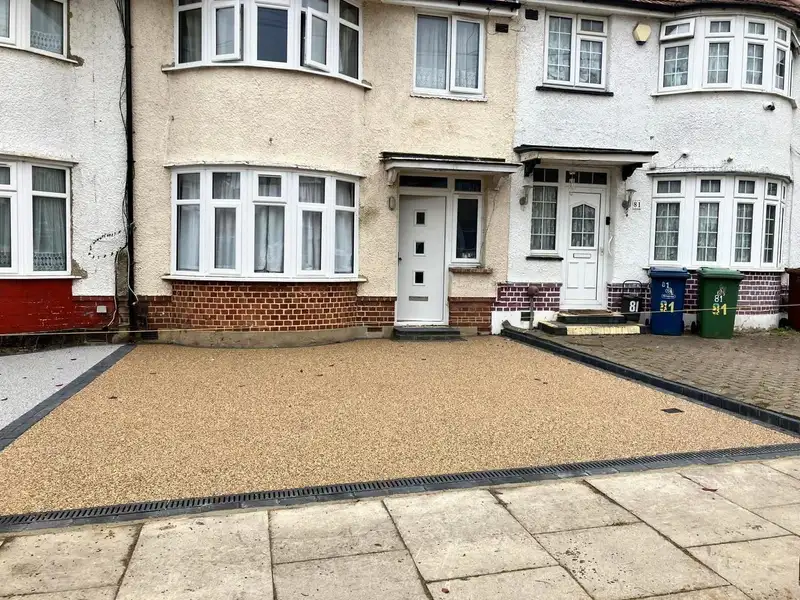
Front space varies street by street. Around Leeman Road, nine in ten terraces open straight onto the street, and in Holgate the terraces nearest the railway have no front gardens, while those on Holgate Road have long ones behind low walls. On Tang Hall’s 1920s streets, front gardens were already giving way to parking: about half on Fifth Avenue by 2013, against one in ten on Fourth Avenue.
Beneath the city lies Sherwood Sandstone, covered by sands, gravels, clay and till, and the York Moraine, a ridge of glacial clay, runs right through it. The council’s drainage guidance says clay limits how much water can soak away across most of the city, and a soakaway needs a percolation test and must sit 5 metres from any building. On clay, the government’s front garden guidance suggests a pipe in the sub-base of a permeable drive, to carry the excess to the drains.
Where a front garden needs planning permission, the council’s householder guidance says it’s unlikely to approve a surface water can’t pass through, and its dropped kerb rules don’t allow a parking area to drain onto the road. So in York, a new drive needs to let water through or drain into the garden.
The rivers make the case. The Ouse and Foss flooded 540 properties in 2000, more than 200 in 2012, and over 600 on Boxing Day 2015, when the Foss Barrier had to be raised. A sudden storm in June 2007 also flooded streets in Haxby, Strensall, Clifton, Acomb and Holgate.
You apply online to City of York Council, with a measured sketch and the owner’s consent, and on A, B and Class III roads you need planning permission before you apply. The council won’t allow a crossing where the parking space is less than 5.5 metres deep. It also wants the crossing 10 metres from a junction and a metre from mature trees, gates that don’t open over the pavement, and a 2-metre solid apron in front of any gravel.
Since April 2022, the crossing can be built by any suitably qualified contractor the council accepts, with street works accredited staff and £5 million public liability cover. It must be built within 12 months of approval, and the council inspects it. The application itself is something we handle for you.
York has 35 conservation areas, from the Central Historic Core to residential ones such as Clifton, St Paul’s Square and Holgate Road, Fulford Road, Tadcaster Road and the Rowntree garden village at New Earswick. The council’s guide to living in one warns that parking made at the expense of front walls and gardens can do clear harm, and taking down a front wall a metre or more high beside the road needs permission.
Two Article 4 directions go further. On East Mount Road, new front hard surfaces, gates, fences and walls all need permission, and in parts of Heslington, so do gates, fences and walls facing a road or footpath. Some post-war estates also have open-plan restrictions that bring every front boundary under planning control.
Parts of York, including the city centre, Acomb, Dringhouses and Heworth, are Areas of Archaeological Importance, where ground works can need six weeks’ notice to the council.
Only if there's room for a parking space at least 5.5 metres deep. Around Leeman Road and in parts of Holgate, terraces open straight onto the street, so there often isn't. We'll measure it at the site visit.
Often it needs help. Where the clay won't take the water, a pipe in the sub-base carries the excess to the drains. What it can't do in York is drain onto the road.
Not without planning permission. Article 4 directions cover front boundaries in both places, and anywhere in a conservation area, a wall a metre or more high beside the road needs permission to come down.
In an Area of Archaeological Importance, ground works can need six weeks' notice to the council. Garden work within 600mm of the surface is exempt, but ask the council whether a new drive counts.
Next step
We promise to reply to every enquiry within the hour.